The Gift of Being a Beginner

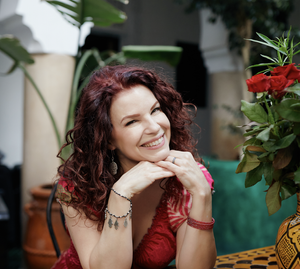
A photo I took on a photography class in Marrakech - a beautiful learning process! Step-by-step!
Here's something I notice almost every week in class: a student tries a movement, I offer a gentle tip to help them refine it, and they immediately apologize. "Sorry!" As if learning something new were a failure.
It breaks my heart a little, every time.
We've somehow absorbed this idea that we should already be good at things. That needing guidance means we're doing it wrong. That the goal is to arrive at "right" as quickly as possible and stay there.
But here's what my physicist father taught me growing up: being wrong isn't bad. Learning is good. In science, you don't fail an experiment — you gather data. Every result teaches you something. Curiosity isn't a weakness; it's the whole point.
I think of it this way: when you cling to the concept of "being right," your hands aren't open to accept growth, learning, or even the next sweet tidbit of truth. You're so busy protecting what you think you know that you can't receive what's next.
The Joy Is in the Journey
Watch a baby elephant learning to use its trunk sometime. That appendage has around 40,000 muscles, and for months, the calf has absolutely no idea what to do with it. It swings it around, trips over it, accidentally smacks itself in the face. And yet — there's no shame in it. Just persistence, play, and eventually, mastery.
We could all use a little more of that energy.
In my classes, there is no hierarchy. Whether you've been practicing for fifteen years or fifteen minutes, we're all on the same team. We're all in the process of learning our own bodies, our own patterns, our own edges. That never stops being true, no matter how "advanced" you become.
When You Fall Off the Wagon
This same kindness applies to building habits. If you miss a class, skip your morning stretch, or let a healthy routine slip — that's not a moral failing. It's just information. Neuroscience shows us that every time we practice self-compassion instead of self-criticism, we're actually strengthening neural pathways that make it easier to try again. Beating yourself up, on the other hand, just makes the wagon harder to climb back onto.
For those of us with ADHD or other neurodivergent brains, this is especially important. We often need different systems, not more willpower. And we definitely don't need more shame.
Beginner's Mind as a Lifestyle
This is also why I love leading cultural retreats. When you're learning to create zellige mosaics in Morocco alongside master artisans, or navigating a new country's customs and language, everyone becomes a beginner together. There's something beautifully leveling about it. The playing field flattens. Curiosity replaces judgment. And in that openness, real transformation happens. That same openness is what real cultural connection requires too, which is exactly what I mean in Culture Isn’t a Photo Op.
A Note on Apologies
Now, I want to be clear: I'm not suggesting you stop apologizing altogether. When we've genuinely hurt someone or made a mistake that affects others, a sincere apology matters. Accountability is healthy. It's how we repair relationships and grow as humans.
But apologizing for being a beginner? For needing guidance? For not already knowing something you came to learn? That's different. That's not accountability — that's shame dressed up as politeness. And it keeps us small.
So the next time you catch yourself apologizing for being a beginner — in class or anywhere — pause. Take a breath. Remind yourself: this isn't a mistake. It's a learning opportunity. And learning? That's the whole beautiful point.
Your hands are open. You're exactly where you should be.
~ Samira
Ready to embrace the journey? New students can try three weeks of unlimited Pilates and Mobility Stretch classes for just $59. Join us at the Yoga Center of Columbia — in-studio or online. And if you're curious about learning alongside fellow adventurers in Morocco, our Hands of Marrakech artisan immersion retreat, October 2-12, 2026 is open for registration. The early bird rates end March 1, 2026.