The Post-Safari Stretch: Why Great Adventure Travel Takes Care of the Whole Adventurer
By Samira Shuruk, Travel Wellness Specialist & Sports Conditioning Coach
On my first retreat in Kenya, I had an eye-opening realization about fifteen minutes into our first game drive.
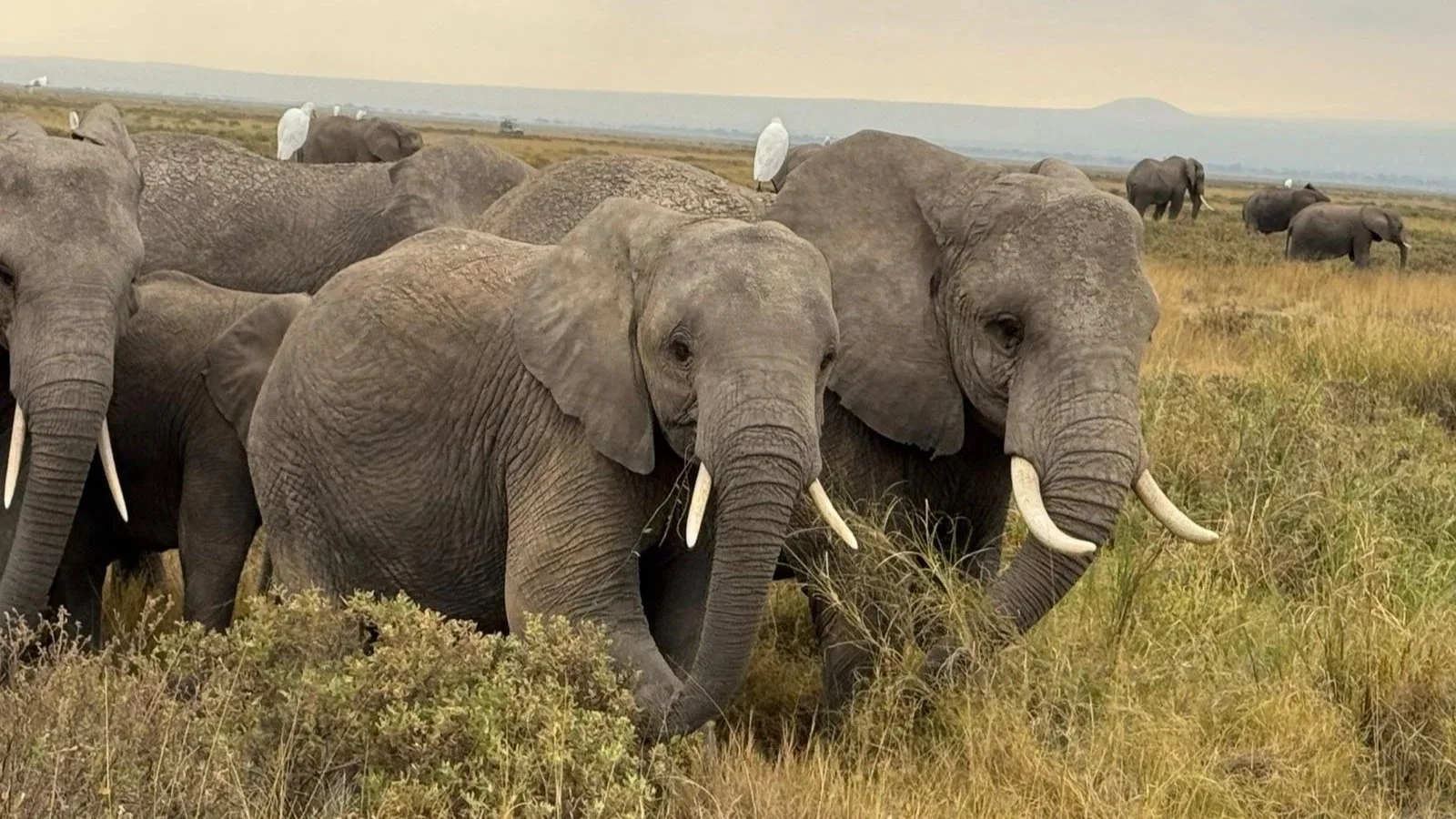
Despite high-clearance Land Rovers with excellent shock absorbers, my guests were gripping their seats, bracing against every rut and bump, twisting for wildlife photos, and engaging their cores in ways they hadn’t expected. By the time we spotted our first elephant herd, everyone was exhilarated. By the time we returned to camp three hours later, everyone was also sore.
Two game drives a day is standard for any quality safari. Hours of stabilizing against unexpected movements. Constant head-turning for that perfect shot. Adrenaline-pumping encounters followed by nights in unfamiliar beds. And on most safari itineraries, not a single stretch, movement session, or recovery protocol in sight.
I was leading a wellness retreat, so we had all of that built in. But it made me wonder: what about everyone else?
What Adventure Actually Asks of Your Body
We tend to think of adventure travel as something we watch happen. The Big Five, the glacier, the ancient ruin. But your body is working the entire time. Safari vehicles compress your spine for hours. Zodiac boats demand grip strength and balance in unpredictable swells. Jungle treks load your joints asymmetrically on uneven terrain. Camel rides activate muscles most people haven’t used since childhood. Even snorkeling, which feels effortless in the moment, taxes your hip flexors, ankles, and lower legs in ways you don’t notice until you’re climbing back into the boat.
The excitement masks the strain. You’re so focused on the lion dozing twenty feet away or the colors of a Moroccan medina at sunset that your body’s signals get drowned out by adrenaline and wonder. It’s not until day three or four that the accumulated tension shows up: the stiff neck, the aching lower back, the fatigue that makes you want to skip the afternoon excursion.
I’ve seen it happen to fit, active people. It’s not about being out of shape. It’s about the fact that adventure travel is athletic performance, and most itineraries treat it like passive sightseeing. As a Sports Conditioning Coach with nearly 40 years teaching movement, I’ve learned that neglecting the adventurer’s body is a blind spot in even the most beautifully planned trips.
Your Nervous System Is Not a Tightrope
There’s a phrase floating around the wellness world right now that needs some honest correction: “nervous system regulation.” The way most people use it, you’d think the goal is to walk a perfectly straight line through life, never getting upset, never feeling off-balance. As if regulation means flatlining into permanent calm.
That’s not how it works. Your nervous system is more like an elastic band. It stretches, it bends, it responds. It’s supposed to. You’re supposed to feel the adrenaline surge when a leopard appears ten feet from your vehicle. You’re supposed to be moved to tears when a Maasai elder shares a story about his grandfather’s cattle. You’re supposed to feel your heart race when live musicians fill a Moroccan courtyard with sound that vibrates in your chest.
Resilience isn’t about avoiding those responses. It’s about having the skills to return to balance after them. To feel what you’re meant to feel, fully, and then come back. That’s what a healthy, resilient nervous system actually does.
What does travel wellness have to do this with this? This is a skillset. It can be practiced and strengthened, the same way you’d train a muscle. The problem is that most of us never learn how. We push through. We numb out. We pour a glass of wine and call it “self-care.” And for people in high-pressure jobs, the stakes are even higher. When things are intensely stressful, how do you feel what you need to feel and then bounce back quickly enough to make clear decisions?
This is what good travel wellness programming teaches. Not on a whiteboard. In real time, through actual experience.
Where the Senses Open, So Does Everything Else
Adventure travel, done well, is one of the richest sensory environments a person can experience. The smell of cedarwood in a Marrakech workshop. The resonance of a drum circle that you feel before you hear it. The particular quality of silence on the savanna at dawn, when the whole world seems to hold its breath. The whale shark looking you in the eye. The ice bath…
These moments do something to us. They open something. Our senses broaden and sharpen. Our habitual thought patterns quiet down. We can learn to to notice things we’d normally override: a gut feeling, a pull toward something, an emotion we can’t quite name. This is our body communicating with us. And it’s not some vague mystical concept. The body is an organ of intelligence, not just a vehicle for the brain. It processes information faster than conscious thought. That “gut feeling” is real data, arriving through channels most of us were never taught to trust. In our regular lives, we’re usually too busy or too distracted to listen. Travel strips away enough of the noise that we can start to hear it again.
When I lead retreats, mindfulness is woven into the rhythm of the trip. Not as a separate “wellness block” but as a natural response to what we’re experiencing. After a powerful cultural exchange. During a quiet moment in nature. Following live music that moved the whole group. These practices are more than learning, enjoyment and relaxation. They’re about learning to be present with what you’re feeling, developing a clearer relationship with your body’s signals, and beginning to trust your own intuition more deeply.
That mind-body connection — the one where your sensory experience and your somatic awareness actually inform your understanding of yourself — that’s not something most of us get to practice in our daily routines. We override our body’s signals so habitually that we forget they’re there. Travel creates the conditions to reconnect. A skilled guide helps you recognize what your body is telling you and learn to work with it. And once you’ve felt that clarity, you don’t forget how to find it again.
Tools for Life, Not Just Memories of a Trip
This is the part that separates a great vacation from genuinely transformative travel.
Great trips give you memories, photos, stories to share at dinner. Transformative travel gives you that too, and it also gives you something you can use. Breathing techniques that work in a board meeting or a conversation with your teen the same way they worked at 8,000 feet. The ability to notice when your body is holding tension around a decision or before it becomes a headache or a snapped reaction. A meditation practice that started on a Kenyan veranda and now anchors your Tuesday mornings. A clearer sense of your own intuition, not because someone told you to “trust your gut,” but because you spent days actually practicing the skill of listening to your body’s intelligence and learning what it has to say.
I’ve watched this happen again and again on my retreats. A woman arrives worried she won’t be able to keep up physically. By day four, she’s hiking terrain she didn’t think she could handle, with energy to spare. But the bigger shift is quieter. She starts making decisions differently. She trusts herself more. The physical resilience becomes emotional resilience becomes a fundamentally different relationship with what she believes she’s capable of.
One of my students, Steve, came back from gorilla trekking in Uganda and told me: “I wouldn’t have been able to do the gorilla trekking through the jungle without your classes. So, thank you!” That’s not just a nice testimonial. That’s someone whose world got bigger because his body was ready for it.
The wellness tools, the somatic awareness, the nervous system resilience, the sharper intuition: these are what you pack in your carry-on for the flight home. They’re what make the trip worth more than its price tag, and what make it last longer than the photos.
What Thoughtful Programming Actually Looks Like
It’s worth naming what this isn’t, because the wellness travel space has gotten noisy.
It isn’t a spa menu. It isn’t a rigid yoga schedule that conflicts with the actual adventure. It isn’t someone leading sun salutations on a yacht deck for the photo op.
Good wellness programming adapts to the journey and the people on it. It might look like a 20-minute morning activation that prepares your body for that day’s specific activities. Micro-stretches during natural pauses: a photo stop, a tea break, the moment between arriving at camp and dinner. Evening release work targeting whatever your body actually encountered that day. Breathwork for altitude adjustment. Meditation after an emotionally rich cultural experience. Somatic practices that help you process what you’re feeling so the experience deepens rather than overwhelms.
It’s designed around the guests, not around a template. A group of seasoned hikers needs different support than a multigenerational family on their first safari. A corporate team building cohesion needs different programming than a solo traveler seeking clarity after a major life transition. A woman managing a pelvic floor concern or a chronic knee issue shouldn’t have to choose between participating and protecting herself.
When it’s done well, guests don’t think of it as “the wellness part.” They just notice that they sleep better, stay present longer, have energy for the 5am game drive, and return home with skills they didn’t have before they left.
The Difference Between a Great Trip and One That Changes You
I’ve been teaching movement for nearly 40 years and leading international retreats since 2017. What I’ve come to believe is this: the quality of a travel experience isn’t determined only by the destination, the accommodations, or the exclusivity of the access. It’s determined by how fully present the traveler is for all of it, and what they’re equipped to do with what they experience.
The most beautifully planned itinerary in the world can’t compensate for a body that breaks down on day three, or exhaustion that turns a once-in-a-lifetime sunset into a blur, or the vague sense weeks later that you were there but somehow missed it.
Wellness programming isn’t a luxury add-on. It’s what turns extraordinary logistics into an experience that genuinely changes you. Your body recovers instead of accumulating strain. Your nervous system builds resilience instead of burning through reserves. Your senses open, your intuition sharpens, and you develop tools that serve you long after you’ve unpacked your bags.
Your adventure deserves your whole self. And your whole self deserves support getting there.
P.S. If you’re curious what this looks like in practice, my retreats to Morocco, Kenya, and Honduras weave movement, mindfulness, somatic practices, and cultural immersion together from day one. Every trip is different because every group is different. Take a look at what’s coming up — and if you have questions, just hit reply. I’ll give you an honest answer.
Whether you’re a traveler preparing for your next adventure or a travel company looking to deepen what you offer your clients, I bring 40 years of movement expertise and somatic training to the world’s most extraordinary journeys. Read more on my Travel Wellness Specialist page.
Contact samira@samirashuruk.com